The Folk Tale That Wouldn’t Let Go
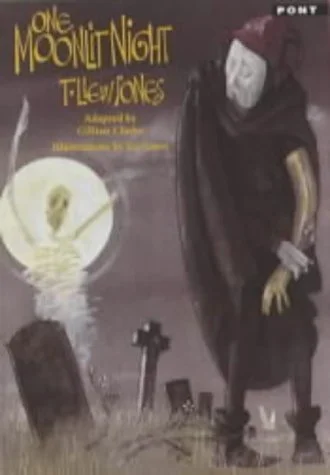
Image courtesy of Goodreads
A few years back, while browsing shelves at a used bookstore, I picked up a book of Welsh folk tales. One Moonlit Night, written by T. Llew Jones and translated into English by Gillian Clarke, is a children’s book, full of lovely illustrations among the simplified stories, perfectly written for the young or the newbie to traditional Welsh tales, or anyone, really, who loves cultural lore.
Ever since I was a child, I’ve been drawn to reading folk tales and mythologies. I think because I was making sense of my own world at the time, I was equally interested in how people of ancient cultures explained what was going on around them. Some of the first books I ever checked out of a library on my own card were books about Roman gods and the punishments they enacted on humans. After the Romans, I became fascinated by the Greeks, and after that, by Hawaiian creation tales. A favorite character was the goddess Pele, who ruled over, among other fiery natural wonders, volcanoes. At an unworldly, untraveled six or seven years old, I could only imagine volcanoes, and when I was reading the stories, I was dropped into the middle of these new and exciting actions and landscapes.
Good stories will do that, take you to all sorts of places before your own two feet and your determination can. And the Welsh stories are good and transportive.
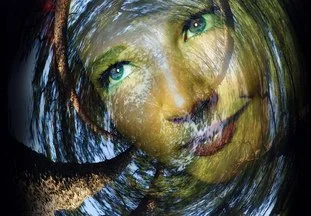
Image of Nelferch courtesy of Folkrealm Studies from the article Welsh Legends: The Lady of Llyn y Fan Fach by zteve t evans
But it was one story from this collection in particular, “The Lady of Llyn Y Fan Fach,” that not only captivated me but set my imagination racing. In it, a young farmer named Gwyn visits the lake named in the title, and while he is there, a most beautiful fairy rises from the water and speaks to him. She is Nelferch, and in an instant, Gwyn is in love.
After a courtship that is more of a test of Gwyn’s devotion, Nelferch agrees to marry him, sacrificing the watery world she knows for a life with him on dry land. But before she agrees to marry, she serves him with a warning. “If you strike me three times, I will return to my home in Llyn Y Fan Fach.”
Gwyn is horrified by the suggestion that he might harm his new wife, and he vows he would never. But then he does, over the course of several years, and after having three children together. All three “strikes” are completely without malice and range from careless to accidental, but that doesn’t matter to Nelferch. All she knows is Gwyn failed to love her the way he promised. She dives back into Llyn Y Fan Fach, leaving Gwyn on the shore, bereft and alone, with three young boys to raise.
Over the years, at book events and in one-on-one conversations with readers, the question I field most often is: “Where do you get the ideas for your novels?” I often explain that my brain is always on, fully engaged in listening, watching, reading, and taking in details from what is happening in the world around me. That’s the short answer. To answer that question more thoroughly here, those sensory details I gather give me a jumping-off point. A funny story I overheard (okay, eavesdropped on) about an overworked husband falling asleep at the dinner table turned into a much more melancholy opening scene of my first novel, Hunger. A former coworker’s method of making mosaic art gave Mark in The Mosaic Artist an occupation and helped convey the theme of rebuilding a shattered family. And the images of a person longing to escape his life by swimming into the sea in Joseph Fasano’s poem “Hermitage” guided me forward as I worked to understand the motivation of a principal character in In the Aftermath.
You’ll often hear these moments of clarity and inspiration expressed in terms of light and magical bestowal: a bright or brilliant idea came to me; the solution struck like a lightning bolt; it was as if a lightbulb turned on in my mind. But these ideas that seem to come out of nowhere are really coming from a brain that is constantly consuming and reviewing and shuffling the sensory data taken in all day, every day.
The idea for Should Have Told You Sooner came to me no differently. For weeks after finishing “The Lady of Llyn Y Fan Fach,” the story’s themes of love and loss and people from different worlds trying to make a connection kept their grips on me. I kept thinking about Nelferch and Gwyn and all the ways we might harm those we profess to love.
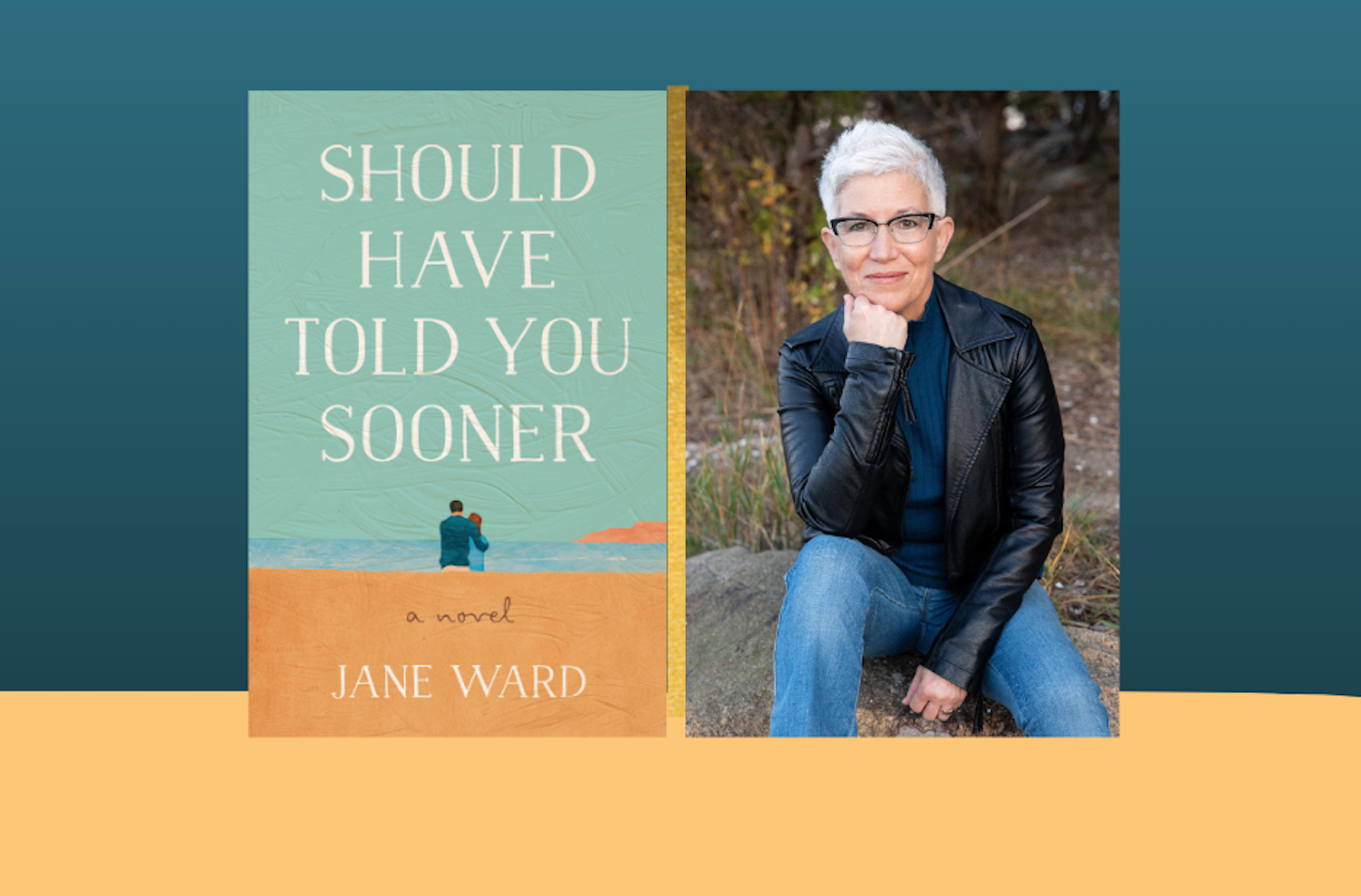
With all this churning in my mind, it wasn’t long before I stopped thinking about the folk tale water fairy and her shepherd and began imagining a more contemporary pair. A young woman off to college in a country she doesn’t know well, studying art history and falling in love for the first time. A young man on the cusp of fame as a painter, falling in love with her right back. And finally, the two people they have become thirty years after misunderstandings and mishaps parted them: a recently separated art historian living and working outside Boston, and a renowned artist living like a hermit in his grandfather’s cottage along the southwest coast of Wales. Noel Enfield and Bryn Jones.
Noel and Bryn and their various friends and family took me into a story that very quickly departed from its original inspiration. In the acknowledgments at the end of Should Have Told You Sooner, I thank these characters for becoming “vivid and noisy and easy to summon every time I sat down to write.” And my thanks were genuine. At times, my mind felt taken over by these people, their lives, and finally, the need to convey the journeys they made to others–a kind of magic in itself. But I could equally thank the serendipity of finding One Moonlit Night at the bookstore just when I needed inspiration. Or the childhood obsession with folk tales that drew me to the volume in the first place. We writers never know which piece of information that comes into our consciousness will spark our desire to create something new, stories and people and situations for readers to absorb and feel moved by. But thankfully, we do recognize the right piece when we see it.
Originally published as an article in Women Writers, Women Books, Feb 10 2026