Defining Characters Through Works of Art
Writing about the three main characters, Noel, Bryn, and Henry, in Should Have Told You Sooner, whose lives intersect in the world of art, art history, and museums, meant making the art world they inhabited come to very realistic life. I drew on art history survey courses I’d taken in college. I stared at art images online in between writing sessions, wandered in and out of art museums in Boston and London, and bent the ear of a local artist about her process of creating. Every piece, place, and technique I explored got poured into this story. These three works in particular helped better define the characters, their pursuits, and their motivations, and in turn helped me to write a more complete, more realistic novel.
Slave Ship (Slavers Throwing Overboard the Dead and Dying, Typhoon Coming On), J.M.W. Turner
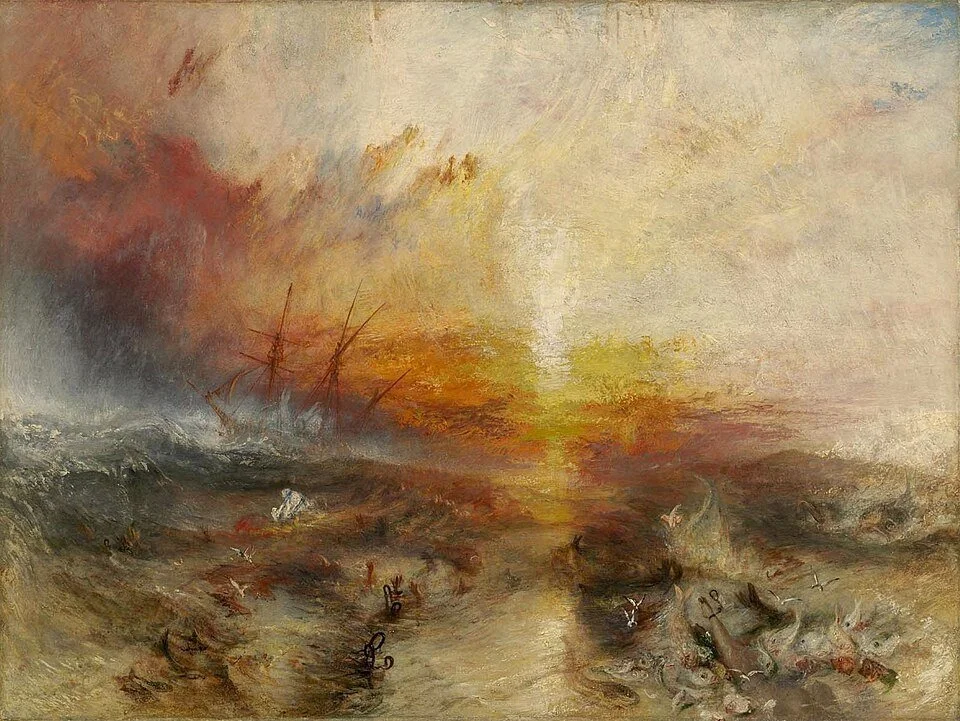
Slave Ship by J M W Turner, 1840, image courtesy of Wikipedia, Museum of Fine Art, Boston
In this masterpiece, Turner captures the moment in 1781 when a British ship’s captain transporting enslaved humans from Africa ordered all 133 Africans thrown into the storm-roiled sea to collect insurance on lost “cargo.”
The work was first exhibited in 1840 at the Royal Academy in London. It now resides closer by at the Museum of Fine Arts, Boston. It’s a visually arresting piece–the color and light and frenzied brushwork combine to depict the depravity of the moment–therefore, a natural decision to make this the work that inspired Noel to become an art historian. I write of that life-changing field trip:
“When Noel saw Turner’s work for the first time at the MFA, she’d been so moved by how the composition of light, color, and loose but intentional brushwork came together to depict the horror transpiring in the churning sea that she’d stood for ages after the group she was with had left the gallery with the docent…on every field trip after, a few of her classmates would rib her about trying not to get lost again. But she simply hadn’t cared what they said or how they perceived her. She’d found her purpose.”
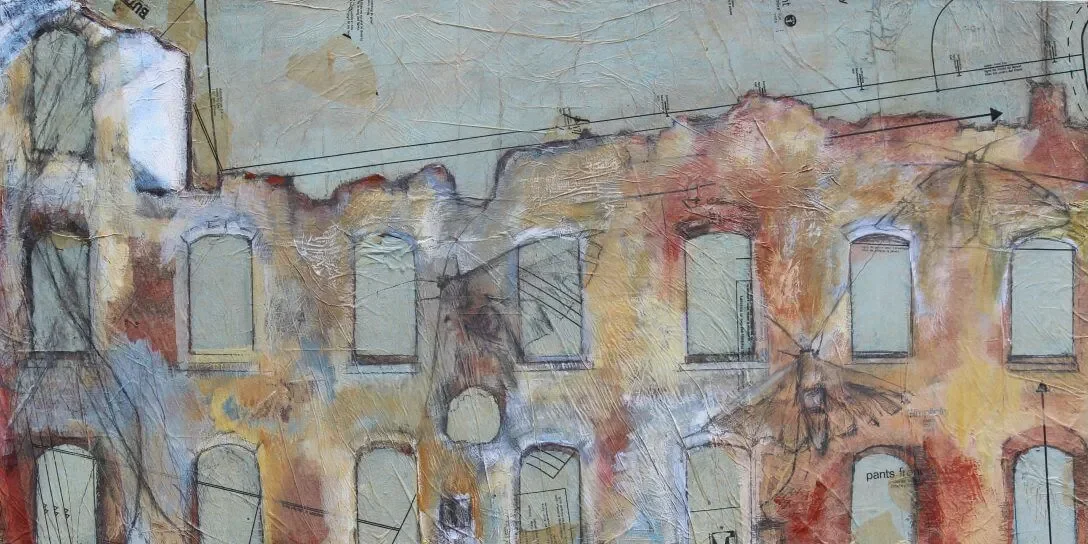
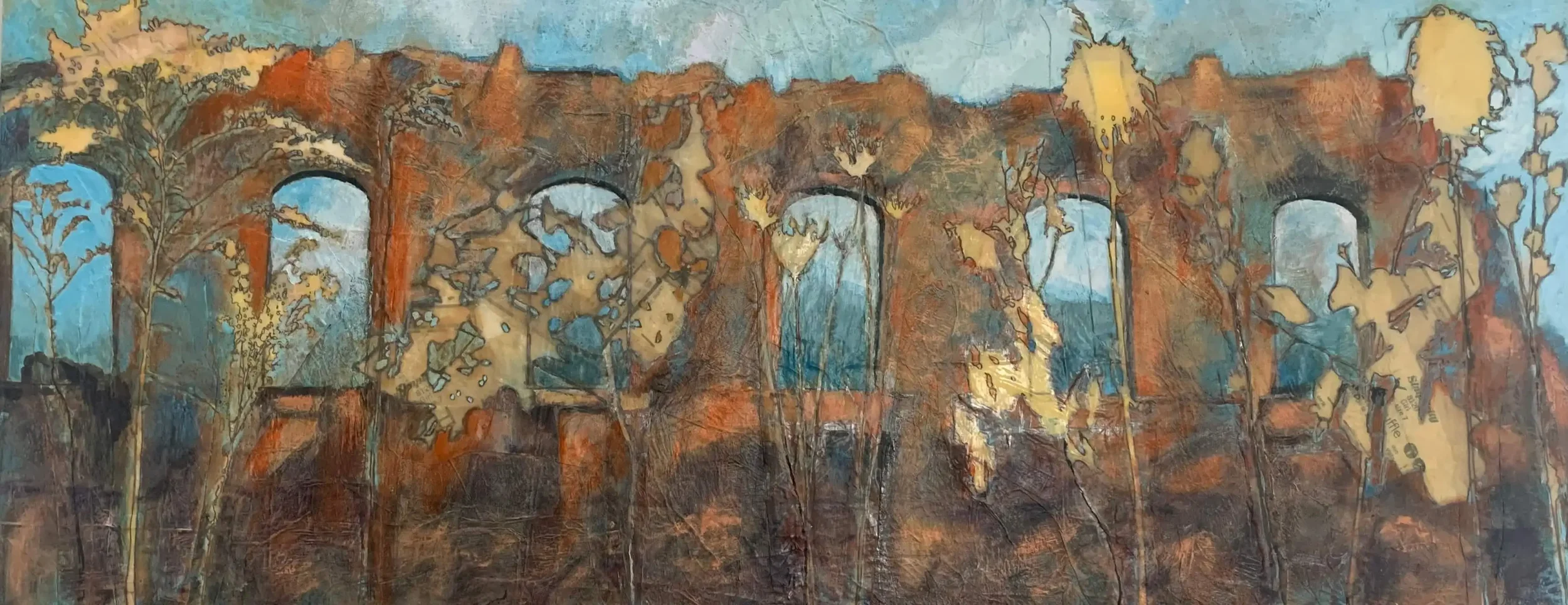
Railroad Salvage, Ancient Ruins, Sue Fontaine
The work of Massachusetts painter Sue Fontaine helped me envision and then describe for the reader the technique behind Henry Bell’s paintings. In Noel’s first encounter with his work, she notices,
“Bell had incorporated faint drafting lines into the canvases, subtly raised horizontals and diagonals, a topography of sorts.”
It was not simply thickly applied paint, as Noel would later find out. But to avoid revealing a major secret in the book, I’ll simply say I knew how I wanted Henry to accomplish these raised sections, but I needed help understanding how an artist might actually pull off the technique.
Sue has a practice of including dress patterns as the “skin” of her paintings, first preparing the base with a fixative, then laying the tissue paper on it, and finally, manipulating the thin paper to create lines and ridges before the glue sets. Once this is painted over, the finished work achieves texture. Sue and I talked for a while in her studio, and she explained her process so that I might be able to write in an informed way about the art of my fictional young rising artist.
Here are two views of The Railroad Salvage Building: left, Railroad Salvage, Ancient Ruins | right, The Last Wall of The Railroad Salvage Building
Snowdon from Near Harlech, Kyffin Williams
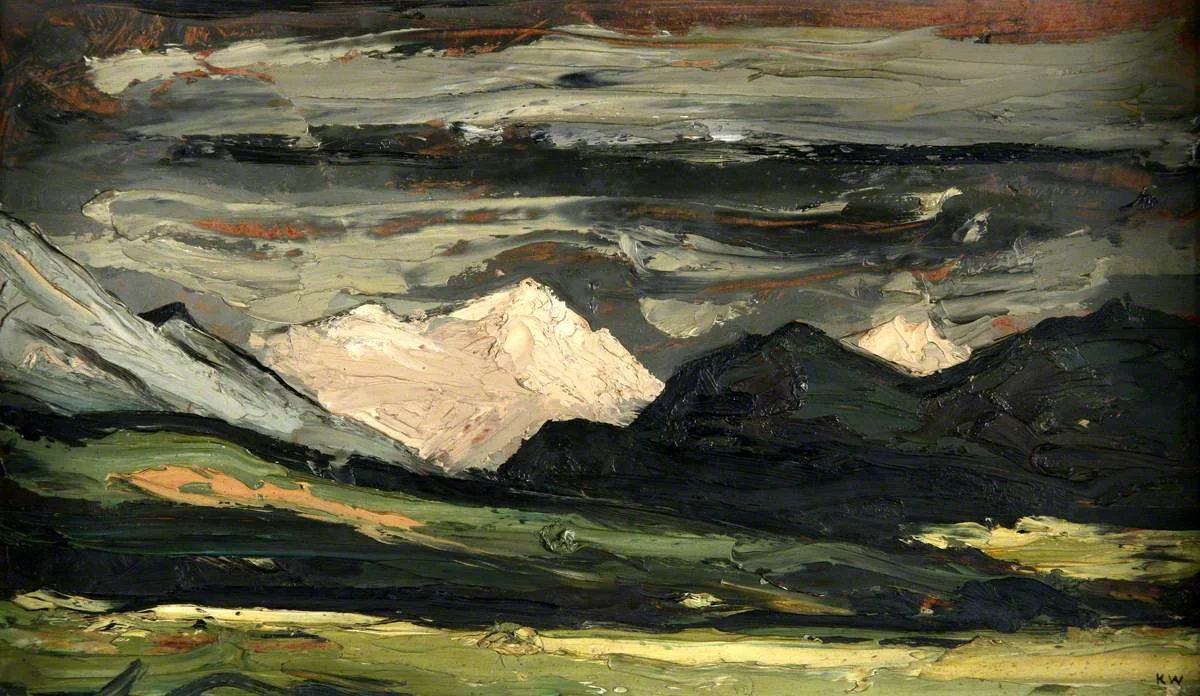
Snowdon Near Harlech by Kyffin Williams, courtesy of the City & County of Swansea, Glynn Vivian Art Gallery Collection
Renowned Welsh landscape painter Kyffin Williams was born in Anglesey, an island off the northwest coast of Wales, and the stark, brooding landscapes of the north feature prominently in his body of work.
This particular painting affected Bryn Jones as a young man poised to become a major artist in his own right, and he later introduced Noel to it during their student days. She returns to see Williams’s work at an art gallery in Wales just before she is about to confront the mistakes of her past. Standing in front of the landscape again after thirty years had passed, painfully aware that her life had veered so sharply from the one she imagined she would have, she
“remembered how, gazing at it for the first time, the mood of isolation had settled over her and brought tears to her eyes, how she had taken Bryn’s hand to feel a connection because she’d felt like a speck herself, always at the whim of an unforgiving landscape.”